


ACT must stop forming shareholder alliances to sell voting rights.
2024-11-28
On the 22nd, attorney Heo Kwon, CEO of HeyHolder, filed a criminal complaint with Yeongdeungpo Police Station against Lee Sang-mok, CEO of the minority shareholder platform ACT; Director Yoon Tae-jun; and Lee Jun-yong, former representative of the Hanmi Science Shareholder Alliance. The alleged offense is a violation of the Capital Markets Act.
On the 1st, Lee Jun-yong, who had no legitimate standing as a representative, declared support for the three-way alliance of Song Young-sook, Lim Ju-hyun, and Shin Dong-kook in the name of "all members of the Shareholder Alliance," without consulting shareholders at all, after discussions in a four-person group chat with CEO Lee Sang-mok, Director Yoon Tae-jun, and another participant. This caused Hanmi Science's share price to fall nearly 30% over two days.
But what truly angers HeyHolder is something that lies a little deeper. The more we learned about this case, the clearer it became that ACT had engaged in conduct that should never be tolerated in the minority shareholder platform market.
Although ACT had signed a service agreement with Chairman Lim Jong-yoon's side, it concealed this fact from shareholders, abruptly selected a shareholder representative, and then continually interfered in that representative's decision-making under the guise of providing advice.
In effect, it installed a figurehead representative and had him act according to ACT's wishes and interests.
The process by which Lee Jun-yong became the Hanmi Science shareholder representative on ACT was as follows.
February 29, 2024. Conduit Co., Ltd. (hereinafter "Conduit"), the operator of ACT, signed an agreement with Hanmi Science Chairman Lim Jong-yoon to provide proxy voting services.
This meant that a "proxy form for Chairman Lim Jong-yoon" would be posted through ACT's electronic proxy service. Indeed, ACT's electronic proxy form states that voting rights will be exercised by Chairman Lim Jong-yoon or one person designated by him.
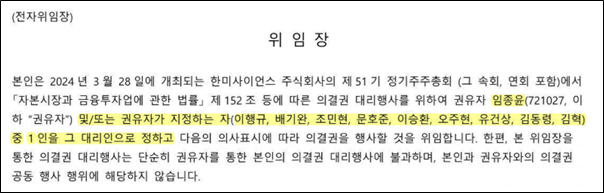
[Figure 1] ACT electronic proxy form for the 51st Annual General Meeting of Shareholders of Hanmi Science Co., Ltd.
March 1, 2024. ACT abruptly announced that it would conduct a survey to form a Hanmi Science shareholder alliance and elect a shareholder representative. Its stated reason was "to submit proxy forms for the shareholders' meeting using ACT's electronic proxy feature."
But this was a lie: ACT had already signed a service agreement with Chairman Lim Jong-yoon just the day before, so it could not arrange for a third party other than Chairman Lim Jong-yoon to receive the proxies. As shown in [Figure 1], the electronic proxy form lists Chairman Lim Jong-yoon and his designees, not former representative Lee Jun-yong.
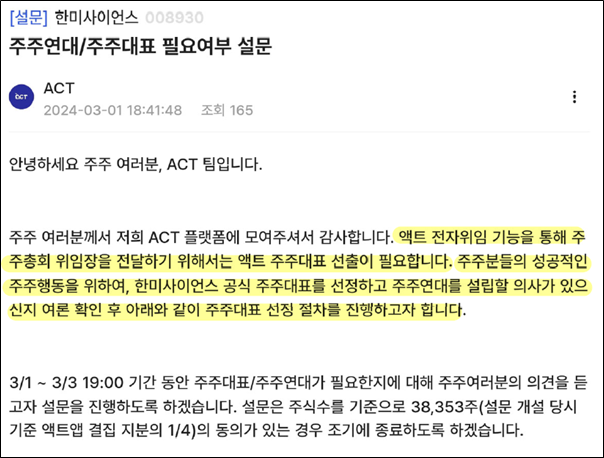
[Figure 2] An out-of-the-blue survey on whether a shareholder representative is needed
March 2, 2024. With 18 people holding 55,298 shares voting in favor in the survey above, the recruitment process for a shareholder representative began.
ACT had announced that it normally allows four days for shareholder representative candidates to apply, but for some reason, it limited applications to a single day, March 3, 2024. Former representative Lee Jun-yong applied as a candidate on the same day the notice was posted.
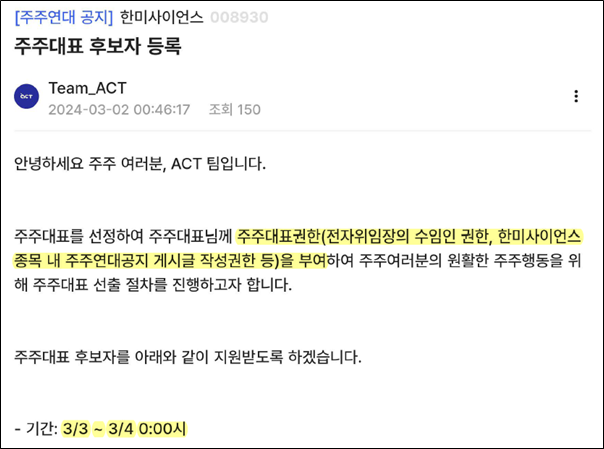
[Figure 3] Just one day to apply as a candidate—why?
March 4, 2024. As former representative Lee Jun-yong was the only applicant, a yes-or-no vote was held on whether to appoint him as shareholder representative.
According to ACT's notice, voting to elect a shareholder representative was supposed to last three days, but ACT announced that it intended to hold the yes-or-no vote for just one day, March 4, 2024.
In the shareholder representative vote, 25 Hanmi Science shareholders holding 75,711 shares participated, and all voted in favor of electing Lee Jun-yong. He was therefore elected shareholder representative of the Hanmi Science Shareholder Alliance.
In other words, shareholders representing just 0.1% of all outstanding shares and 0.06% of all shareholders participated in the vote that elected Lee Jun-yong as shareholder representative.
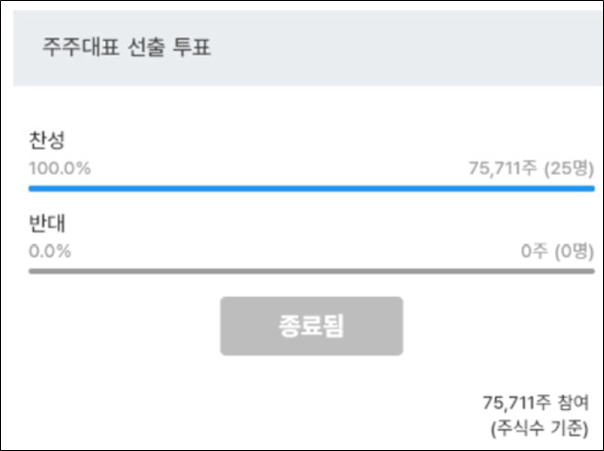
[A shareholder alliance elected by just 25 people. How many of them were affiliated with ACT?]
HeyHolder's reasons for viewing former representative Lee Jun-yong as a figurehead planted by CEO Lee Sang-mok are simple.
(1) The process of electing a shareholder representative began the very next day after the agreement with Chairman Lim Jong-yoon was signed,
(2) Voting procedures for the shareholder alliance were initiated even though the existing service agreement with Chairman Lim Jong-yoon made it virtually impossible to collect proxies contrary to his wishes,
(3) ACT rushed through the election of the shareholder alliance representative in violation of its own stated procedures for electing shareholder representatives,
(4) The shareholder alliance's activities were decided behind closed doors in a four-person group chat that included CEO Lee Sang-mok and Director Yoon Tae-jun.
We understand that ACT told reporters it had done nothing shameful in connection with this complaint. We therefore ask ACT:
You say you elected a shareholder alliance representative because someone was needed to receive proxies. Then why does the proxy form list only Chairman Lim Jong-yoon and his designees, but not former representative Lee Jun-yong?
Do you think it is appropriate for ACT to advise the subsequently formed shareholder alliance and take part in its decision-making while concealing the fact that it signed a service agreement with Chairman Lim Jong-yoon's side on February 29, 2024?
Whether online or offline, proxy collection agencies are mercenaries. They have no choice but to work in the interests of the party that hires them. They may be paid according to the number of shares for which they collect proxies, or receive a success fee once they collect proxies for more than a certain number of shares. ACT, too, is highly likely to have entered into such an agreement. How can ACT's involvement in the shareholder alliance's decision-making possibly be justified under these circumstances?
ACT's conduct disrupts not only the capital markets but also the platform market. At a time when shareholders are just beginning to come together to take action, HeyHolder had no choice but to file a criminal complaint, if only to prevent a recurrence of conduct that betrays shareholders' trust in platforms. To regain shareholders' trust, ACT must show genuine remorse and offer a sincere apology.
What do you, our fellow shareholders, think?