

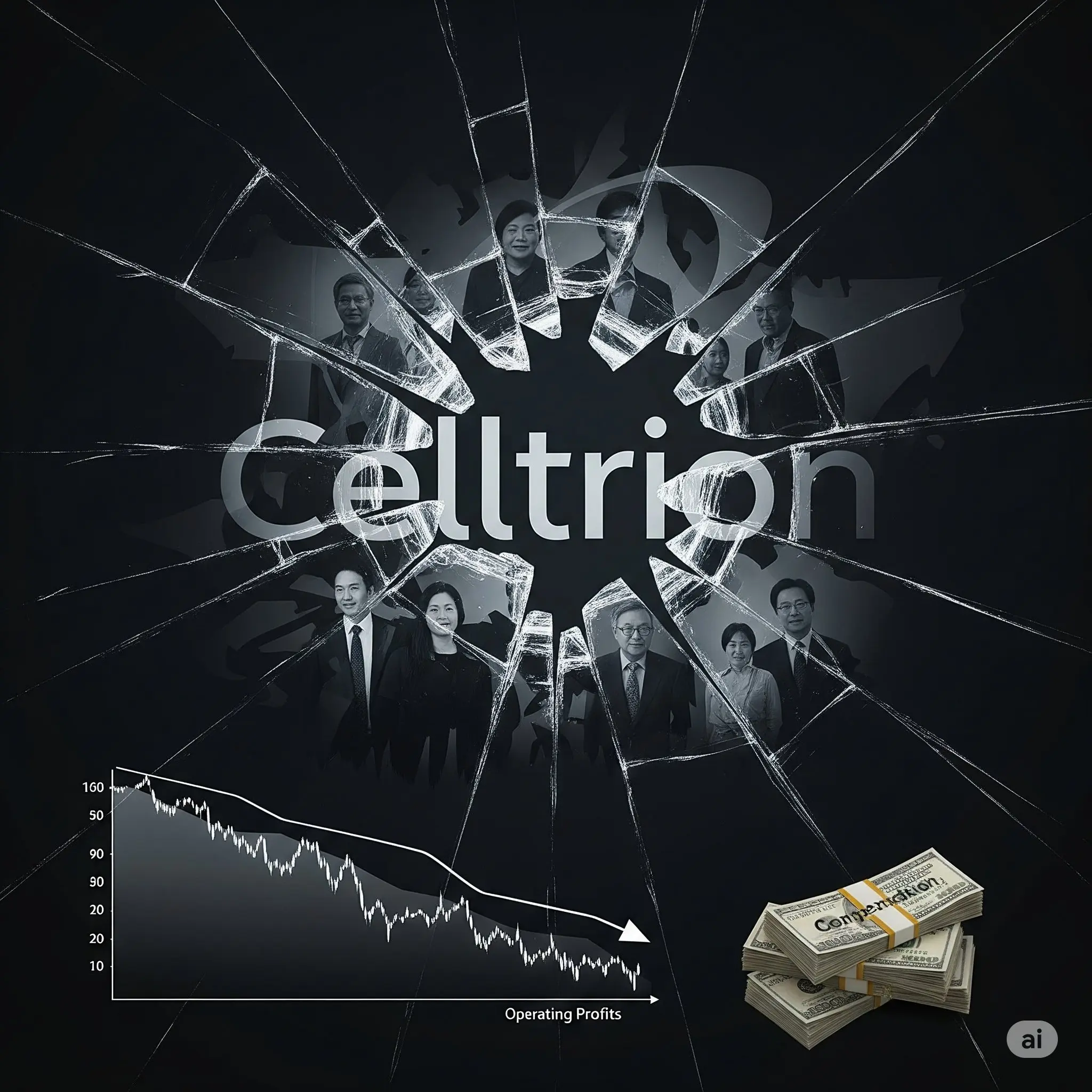
Celltrion's Growth Has a Dark Side: Distorted Governance and Shareholder Sacrifice to Defend Management Control
2025-07-18
1. Celltrion Created the 'K-Bio Miracle,' But...
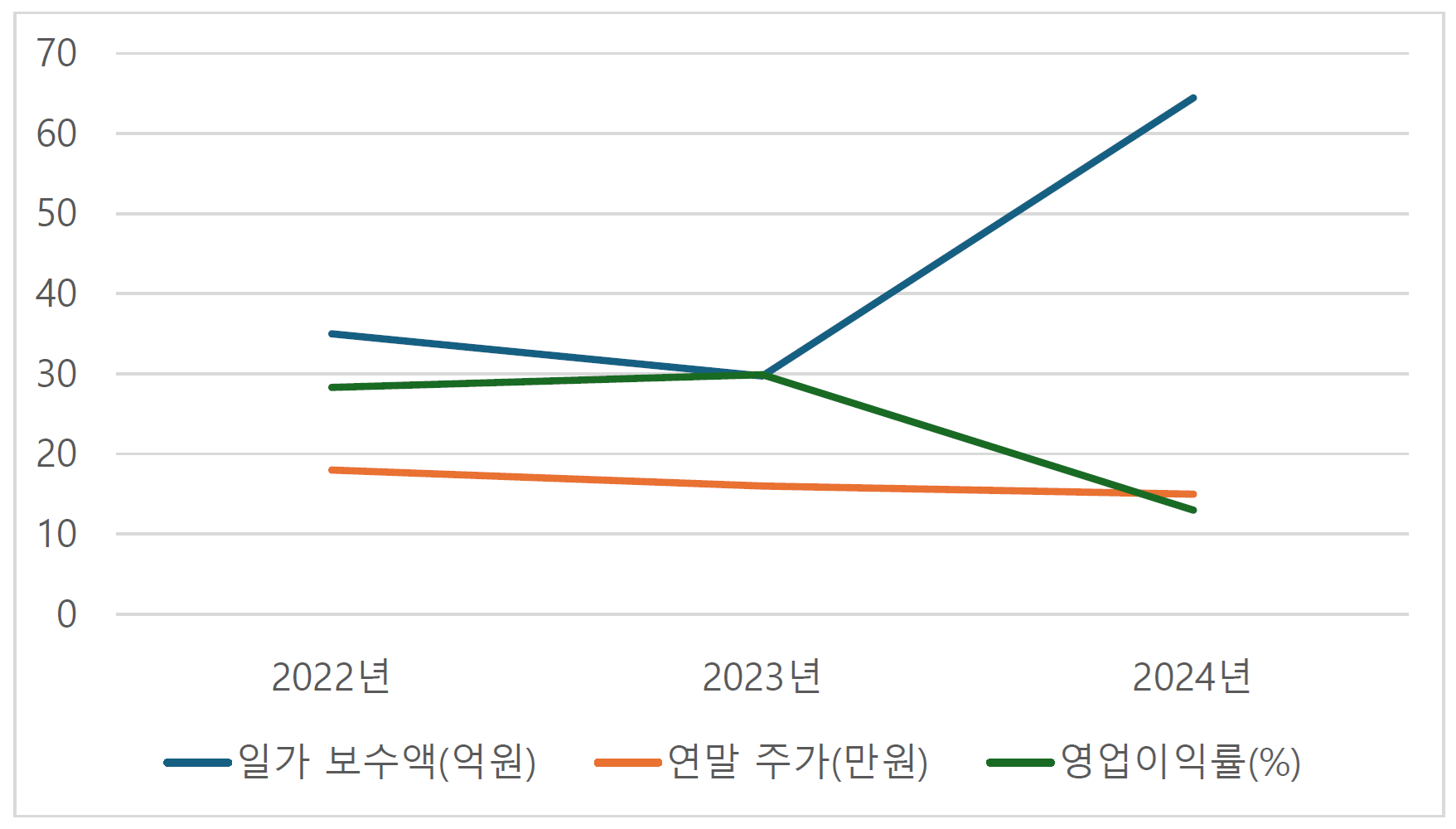
Celltrion's consolidated revenue grew by more than 50%, from KRW 2.284 trillion in 2022 to KRW 3.5573 trillion in 2024. Over the same period, however, operating profit actually declined from KRW 647.2 billion to KRW 492 billion. In particular, its operating margin plunged from 28.3% in 2022 to 13% in 2024.
This is attributed to a combination of factors, including dependence on a single market, Europe, and reduced profitability from transactions between affiliates. In particular, a range of management problems have accumulated within Celltrion, including family-centered governance, a lack of professional management, excessive compensation, and opaque investor relations strategies.
These problems are also reflected in the share price, which steadily declined from KRW 361,000 in January 2021 to KRW 156,000 as of May 2024, losing more than half its value. As of May 2025, the recovery remains minimal. Despite this weak share price performance, compensation for Chairman Seo Jung-jin and his family continues to rise, while shareholder return measures, such as share buybacks, remain woefully inadequate.
This column critically examines Celltrion's governance and management conduct based on public disclosures and explores practical response strategies available to activist shareholders and ordinary investors.
2. The Entrenched 'Seo Jung-jin and His Two Sons' Regime and a Governance Structure Lacking Independence
Celltrion's governance is organized around a holding company structure centered on Celltrion Holdings.
According to Celltrion Holdings' disclosure on the status of its large business group (as of May 1, 2025), Celltrion Holdings is the largest shareholder in Celltrion, Inc., with a 22.45% stake, while Chairman Seo Jung-jin owns 98.13% of Celltrion Holdings. Celltrion, Inc. is also the largest shareholder in Celltrion Pharm, with a 54.80% stake. Through this ownership structure, Chairman Seo exercises absolute influence over both companies.
The problem is that this structure entrenches family-centered ownership and management. Chairman Seo's eldest son, Seo Jin-seok, serves as CEO of Celltrion, Inc., while his second son, Seo Jun-seok, is also reportedly receiving management training at Celltrion Pharm. With the brothers each holding key positions at major affiliates, the Celltrion Group effectively operates under a 'father-and-two-sons regime.'
The audit committee also fails to provide meaningful oversight. Throughout 2024, there was not a single instance in which Celltrion's board or audit committee voted against or deferred a management proposal. This shows that Celltrion's board is effectively little more than a formality.
3. Executive Compensation: A 'Free-Rider Reward Structure' Unrelated to Performance
Celltrion has been criticized for setting executive compensation without regard to corporate performance or share price trends. The compensation of Chairman Seo Jung-jin and his son, CEO Seo Jin-seok, provides a prime example.
According to Financial Supervisory Service disclosures, Celltrion Chairman Seo Jung-jin received KRW 4.377 billion in compensation in 2024, up 257.3% from the previous year's KRW 1.225 billion. His eldest son, Celltrion CEO Seo Jin-seok, received KRW 2.07 billion last year, an 18.4% increase from KRW 1.749 billion in 2023. Their combined compensation totaled KRW 6.447 billion, more than double the KRW 2.974 billion paid in 2023. Even compared with 2022, when Chairman Seo received KRW 1.75 billion, his eldest son, CEO Seo Jin-seok, received KRW 1.749 billion, and his second son, Seo Jun-seok, received KRW 1.661 billion from Celltrion Healthcare—a combined KRW 5.16 billion—the compensation paid to the controlling owner and his son reached an all-time high. These pay increases also reflect the decision at the 2023 annual general meeting to raise the cap on directors' compensation from KRW 9 billion to KRW 20 billion.
Yet the continued rise in the controlling family's compensation runs directly counter to the trends in Celltrion's share price and operating profit. The share price, which stood at KRW 361,000 in January 2021, continued to decline, falling to KRW 156,000 as of May 2024 and losing more than half its value. As of May 2025, the recovery remains minimal. Its operating margin also plunged from 28.3% in 2022 to 13% in 2024.
Nevertheless, the controlling family continues to receive excessive compensation regardless of the company's operating margin or share price, and their compensation even increased sharply in 2024.
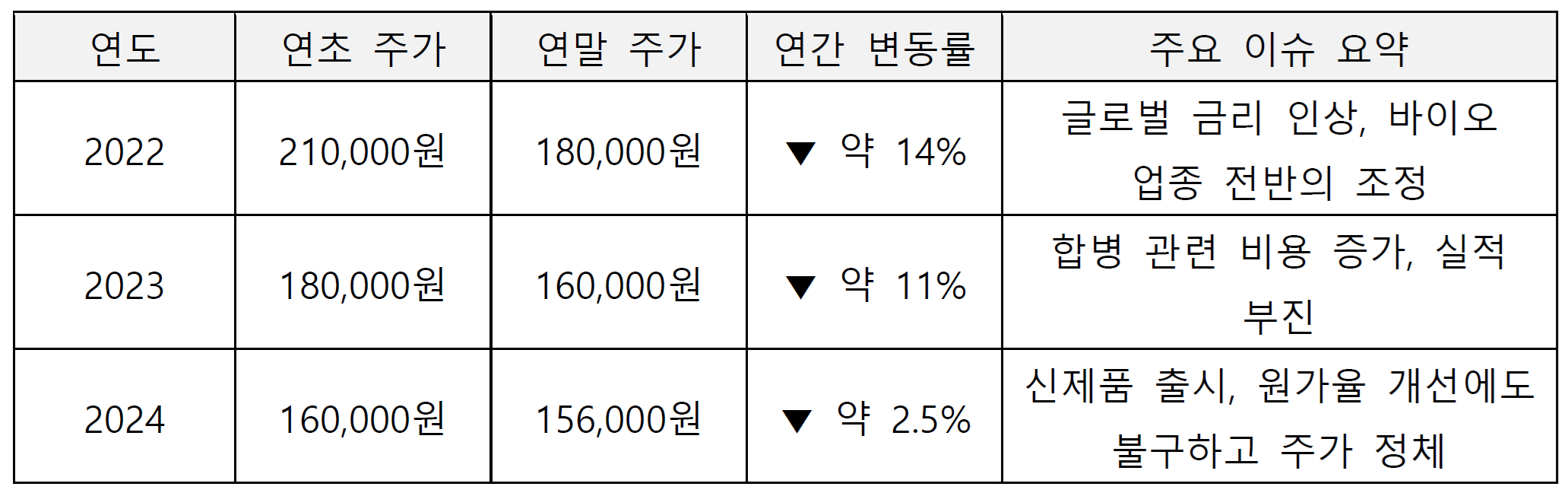

The trends in operating margin, share price, and the controlling family's compensation are compared below.
Moreover, shareholder return measures, such as share buybacks, remain woefully inadequate.
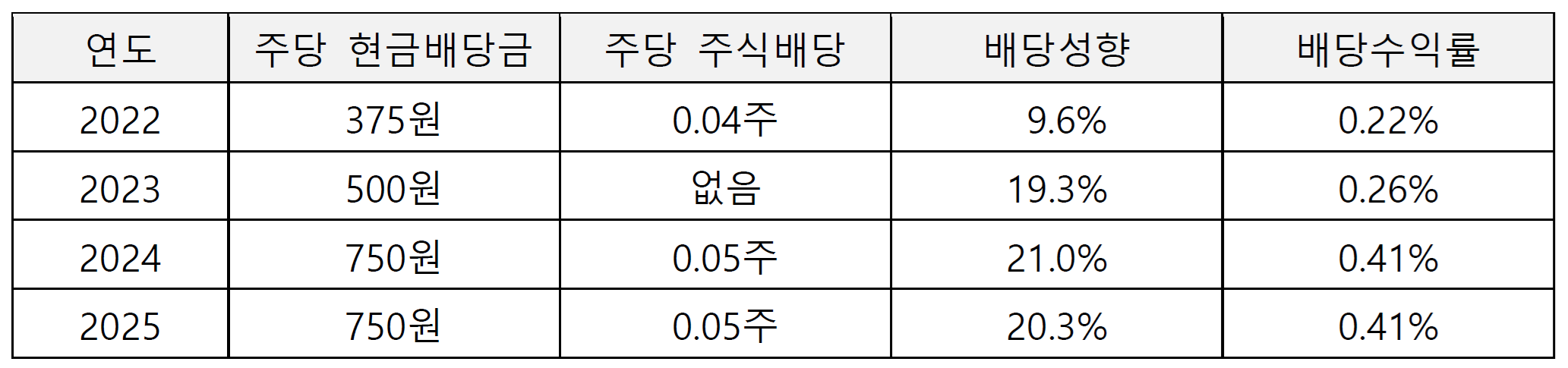
As of 2025, Celltrion's dividend yield is approximately 0.41%, far below the average dividend yield of 2.7% among KOSPI-listed companies. It also pays relatively low dividends compared with peers in the pharmaceutical and biotech sector, such as GC Green Cross (KRW 1,500 per share) and Samjin Pharmaceutical (KRW 800 per share).
4. The Reality Behind Share Buybacks: Defending Management Control, Not Returning Value to Shareholders
Meanwhile, Celltrion has continuously conducted large-scale share buybacks since 2022 under the banner of returning value to shareholders. It spent approximately KRW 250 billion in 2022, KRW 850 billion in 2023, and KRW 530 billion in 2024 on share repurchases. In total, approximately KRW 1.6 trillion was spent on buybacks over the three years.
Treasury shares were also canceled. In October 2023, the company decided to cancel 23 million shares worth KRW 359.8 billion, followed by additional cancellations of 11.1 million shares worth KRW 176.4 billion in April 2024 and 30.1 million shares worth KRW 491.8 billion in December 2024. This amounts to approximately KRW 1 trillion devoted to share cancellations during this period.
The problem is that a substantial portion of the repurchased shares remains in treasury rather than being canceled. Treasury shares can disadvantage minority shareholders as they seek to secure stakes and exercise voting rights to oppose a merger. Although treasury shares generally carry no voting rights, management can issue bonds exchangeable for those shares, sell them to friendly third parties, or swap treasury shares with other companies, enabling voting rights to be exercised in management's favor.
5. An Overambitious Three-Company Merger Push Lacking Procedural Legitimacy
On August 17, 2023, a merger between Celltrion and Celltrion Healthcare was carried out. The merger ratio was set at 1:0.45, even though Celltrion Healthcare's operating margin in 2022 was just 11.6%, compared with Celltrion's 28.3%. The ratio, which disregarded this profitability gap, was criticized as a decision designed to serve the controlling shareholder's interests.
Concerns about conflicts of interest were also raised at the time of the merger. There were allegations that Chairman Seo Jung-jin had exercised indirect control over Celltrion Healthcare since it was an unlisted company. Given that the value of his holdings was expected to rise after the merger, questions about the merger's fairness and rationale were repeatedly raised.
6. Zymfentra: The Gap Between Optimistic Investor Relations and Actual Sales
Celltrion renamed Remsima SC 'Zymfentra' for the U.S. market, obtained FDA approval in late 2023, and began full-scale sales in 2024. At the time, Celltrion projected Zymfentra sales of KRW 600 billion in an investor relations presentation, but actual sales amounted to only around KRW 36 billion.
7. The Market's Warning: Reactions at the Shareholders' Meeting and in the Media
At Celltrion's annual general meeting in March 2025, shareholders voiced a barrage of complaints about the controlling family's high compensation and the procedural legitimacy of the merger process. Minority shareholders expressed their frustration, saying, “The company's profits go only to Chairman Seo Jung-jin and his family, not to shareholders.” Questions also poured in on various other issues, including the lack of professional management and inadequate dividends relative to earnings, but management failed to earn shareholders' trust, merely repeating generic answers.
The National Pension Service also reportedly voted against some director appointment proposals at the March 2025 shareholders' meeting. This shows that institutional investors, too, take a critical view of Celltrion's governance.
The media also continues to highlight Celltrion's governance problems. One media outlet pointedly noted, “When announcing the merger plan, Chairman Seo said it was what shareholders wanted and insisted it had nothing to do with succession of management control. Yet his appointment of family members to key positions has prompted accusations that his words and actions do not match.”
8. Structural Reforms to Restore Shareholder Trust
• Improve the board's structure: Strengthen the board's independence and expertise by increasing the proportion of outside directors, recruiting biotech experts, electing audit committee members separately, and introducing cumulative voting.
• Introduce professional management: Following the founder's announcement that he will step down, management accountability needs to be ensured by recruiting a credible external CEO and transparently disclosing the appointment process.
• Reform the compensation system: Introduce performance-based bonuses linked to external performance measures such as ROE (return on equity), TSR (total shareholder return), and ESG metrics, and require shareholder approval at general meetings for high compensation packages.
• Change the treasury share policy: Rather than simply holding treasury shares, shift to canceling them in full or returning a certain proportion directly to shareholders.
• Strengthen shareholder return policies: Raise the dividend payout ratio to at least 30% and actively consider introducing quarterly dividends.
• Strengthen shareholder communication: Seek to restore trust with shareholders by holding regular meetings, expanding earnings briefings, and supporting the exercise of voting rights through electronic voting platforms.
9. Conclusion: Celltrion Now Needs a 'Major Governance Overhaul.'
Celltrion can no longer rest on the laurels of its past strong performance. What the market demands now is not short-term results, but credible governance reform and transparent management. All market participants, including minority shareholders, institutional investors, and activist funds, must maintain strong pressure on Celltrion to transform into a transparent and fair company. This goes beyond mere criticism: it is also a way to uphold investor protection, a fundamental principle of capital markets.
To become a true global biotech leader, Celltrion must not ignore the challenge of earning “shareholder trust,” which matters even more than financial performance.