


Korea Zinc's Clever Move Under Pressure
2024-12-27
MBK and Young Poong have raised their stake in Korea Zinc to 40.97%, while the holdings of Chairman Choi Yun-beom and his allies remain at around 33.89%, widening the gap between the two sides to 7.08 percentage points. Given that Korea Zinc's treasury shares account for 12.27% following the tender offer, the free float amounts to just 12.87%, most of which is presumably held by the National Pension Service and institutional investors.
Many experts therefore predicted a victory for MBK and Young Poong, and rumors even circulated in the securities industry that Korea Zinc was attempting the questionable maneuver of lending its treasury shares to Chairman Choi Yun-beom's side to restore their voting rights. Although the claim made no legal sense, I did wonder whether Chairman Choi, left with no other options, had made another poor choice, as he had with the previous rights offering.
MBK and Young Poong went so far as to seek an injunction prohibiting the disposal of treasury shares, only to withdraw their application after counsel for Chairman Choi Yun-beom's side assured the court that no treasury shares would be disposed of.
Yet when the details finally emerged, the battle was far from over. Unlike its previous rights offering gambit, I believe Korea Zinc's latest move is not only legally viable but also offers both a principled justification and practical benefits.
The Best Move for Both Principle and Practical Gain
Chairman Choi Yun-beom's side has completely reframed the battle for management control by placing stronger rights for small shareholders and better corporate governance at the forefront of this extraordinary general meeting. The meeting, scheduled for January 23, 2025, was originally requested by MBK and Young Poong. Their plan was to secure management control by electing 14 additional directors alongside the 13 directors on Korea Zinc's side.
But after receiving MBK and Young Poong's request to convene the extraordinary general meeting, Korea Zinc added various proposed amendments to its articles of incorporation to the agenda, turning a straightforward contest for votes into a battle full of tactical maneuvers(?).
The amendments to the articles of incorporation proposed by Korea Zinc cover (1) introducing cumulative voting, (2) setting a cap on the number of directors, (3) a stock split, (4) explicitly codifying protections for minority shareholders, (5) appointing an outside director as board chair, (6) changing the dividend record date, and (7) introducing quarterly dividends.
These measures have long been staples of discussions on corporate governance reform. Small shareholders have repeatedly called on listed companies to adopt them, only to be rebuffed. Now Korea Zinc has included them in its proposed amendments to the articles of incorporation.
Of course, there is only one objective: protecting management control. But if these measures bring substantive improvements in the right direction, I see no reason to downplay their significance. The most important issue among the proposed amendments right now is the introduction of cumulative voting. If cumulative voting is introduced, Chairman Choi Yun-beom could retain a board majority for several more years. For MBK, which entered the battle for management control using outside funding, the longer it takes to gain control, the more its supplies dwindle and its troops' morale declines. This appears to be why MBK argues that it would be unlawful to elect directors through cumulative voting at the same meeting that amends the articles of incorporation to introduce it.
* Cumulative voting is a system that gives shareholders, for each share they hold, as many votes as there are directors to be elected. At a general meeting where two or more directors are being elected, shareholders receive a number of votes per share equal to the number of directors to be elected and may concentrate those votes on one or more director candidates of their choice.
MBK Faces an Unblockable Move(?)
If Chairman Choi Yun-beom's previous rights offering gambit was a disastrous blunder that should never have been attempted, I believe the cumulative voting gambit is an excellent choice that serves both principle and practical interests. For listed companies with total assets of at least 2 trillion won, the 3% voting cap applies to proposed amendments introducing cumulative voting, putting MBK and Young Poong, with their concentrated shareholdings, at a disadvantage. Moreover, the stewardship code makes it virtually impossible for the National Pension Service and institutional investors to oppose the proposal.
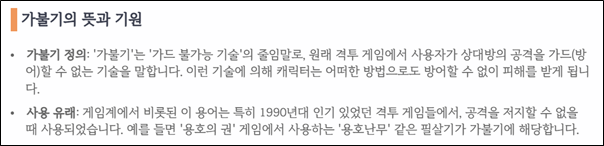
If MBK and Young Poong support the introduction of cumulative voting, they will be unable to take control of the board this time. If they oppose it, they will effectively be admitting that their professed commitment to better corporate governance was hollow. They have thus been caught by what gamers call an unblockable move.
There is also something bittersweet about this. It is disappointing that changes small shareholders have demanded so persistently were accepted only when they were seen as potentially advantageous to one side in a battle for management control. Regardless of the motives, however, I believe the changes Korea Zinc is pursuing could spark change not only at the company but also across Korea's capital markets. That is because this initiative involves changes to the rules themselves—the articles of incorporation—rather than mere words or window dressing.
We are increasingly moving toward an era in which small shareholders' rights and interests are protected and their voices carry greater weight. I hope that both Chairman Choi Yun-beom's side and MBK and Young Poong have truly taken to heart that the only way to win this battle is to strengthen small shareholders' rights and improve corporate governance.